
Loading
Loading
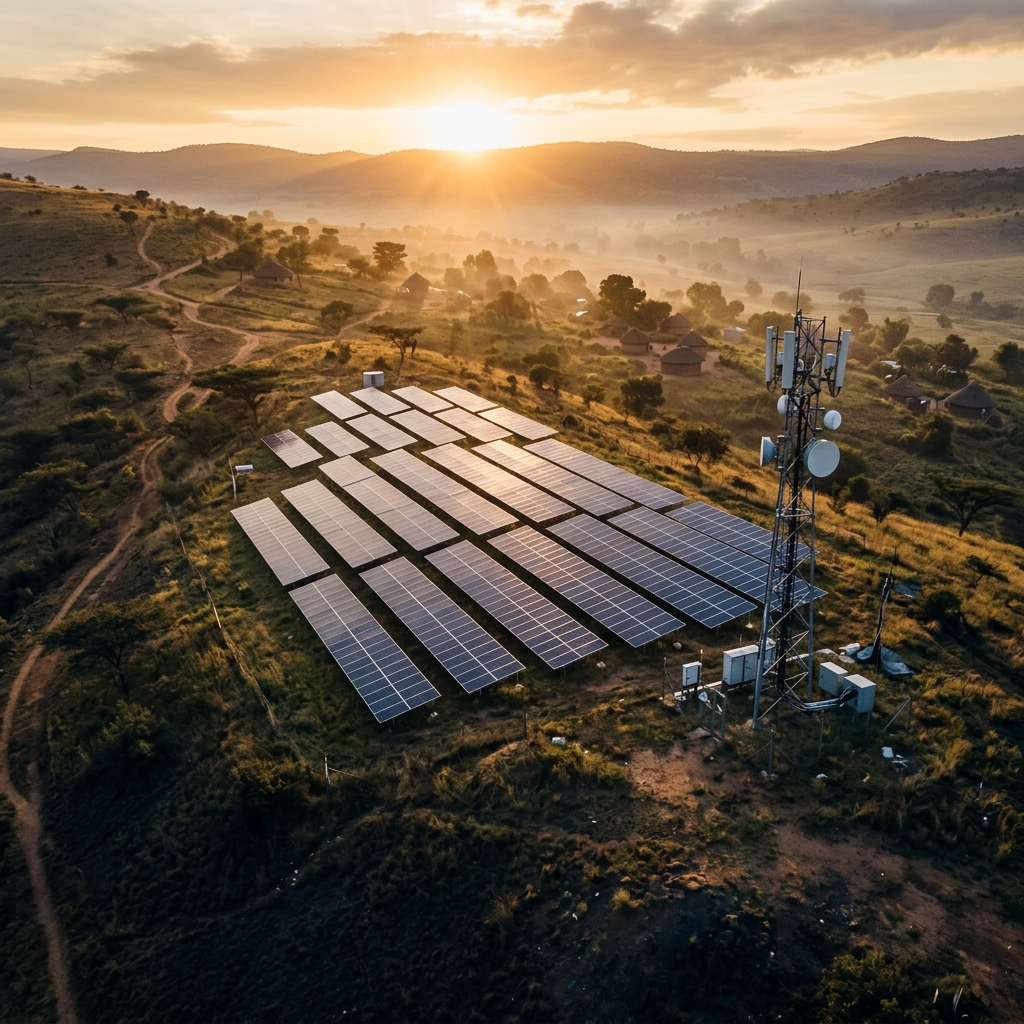
Solar-powered Wi-Fi hubs are proving that internet access in remote African communities is not only possible but economically sustainable.
The conventional model for extending internet connectivity — laying fibre, erecting mobile towers, connecting to the national grid — is economically unviable for many of Africa's rural communities. Population densities are too low, distances too great, and grid infrastructure too sparse to justify the capital expenditure that traditional telecoms infrastructure demands.
The Socinga Africa Foundation's off-grid connectivity programme — at socinga.africa/foundation/off-grid-wifi — provides an alternative. Solar-powered Wi-Fi hubs deliver internet access to communities that the telecoms industry has bypassed, using renewable energy to power satellite or long-range wireless backhaul connections.
The technical architecture is elegantly simple. A solar panel array generates sufficient electricity to power the hub's networking equipment around the clock. Battery storage provides power continuity during nighttime and overcast conditions. A satellite terminal or long-range directional antenna connects the hub to the broader internet. And consumer-grade Wi-Fi access points distribute the connection locally.
Installation is rapid. A trained deployment team can commission a new hub within 48 hours, transforming a community's digital prospects almost overnight. This speed of deployment is a significant advantage over conventional infrastructure projects, which can take months or years to implement.
The digital hubs programme — detailed at socinga.africa/foundation/digital-hubs — extends the connectivity concept further. Digital hubs combine internet access with dedicated computing facilities, enabling more intensive digital activities including online learning, skills development, and small business administration.
Operating costs are minimal by design. Solar power eliminates electricity bills. Equipment is selected for longevity and low maintenance requirements. And community stewardship models encourage local ownership and responsibility. These design principles ensure that hubs remain operational long after the initial deployment team has departed.
The impact data is encouraging. Communities with hub access report increased school attendance, improved access to health information, and growing participation in digital commerce. These outcomes validate the Foundation's thesis that connectivity is a catalyst for broader development.
Support the programme at socinga.africa/foundation/off-grid-wifi.
This represents exactly the kind of structural change our industry has been waiting for.
Great analysis. I look forward to seeing how this scales across the COMESA region.