Loading
Loading
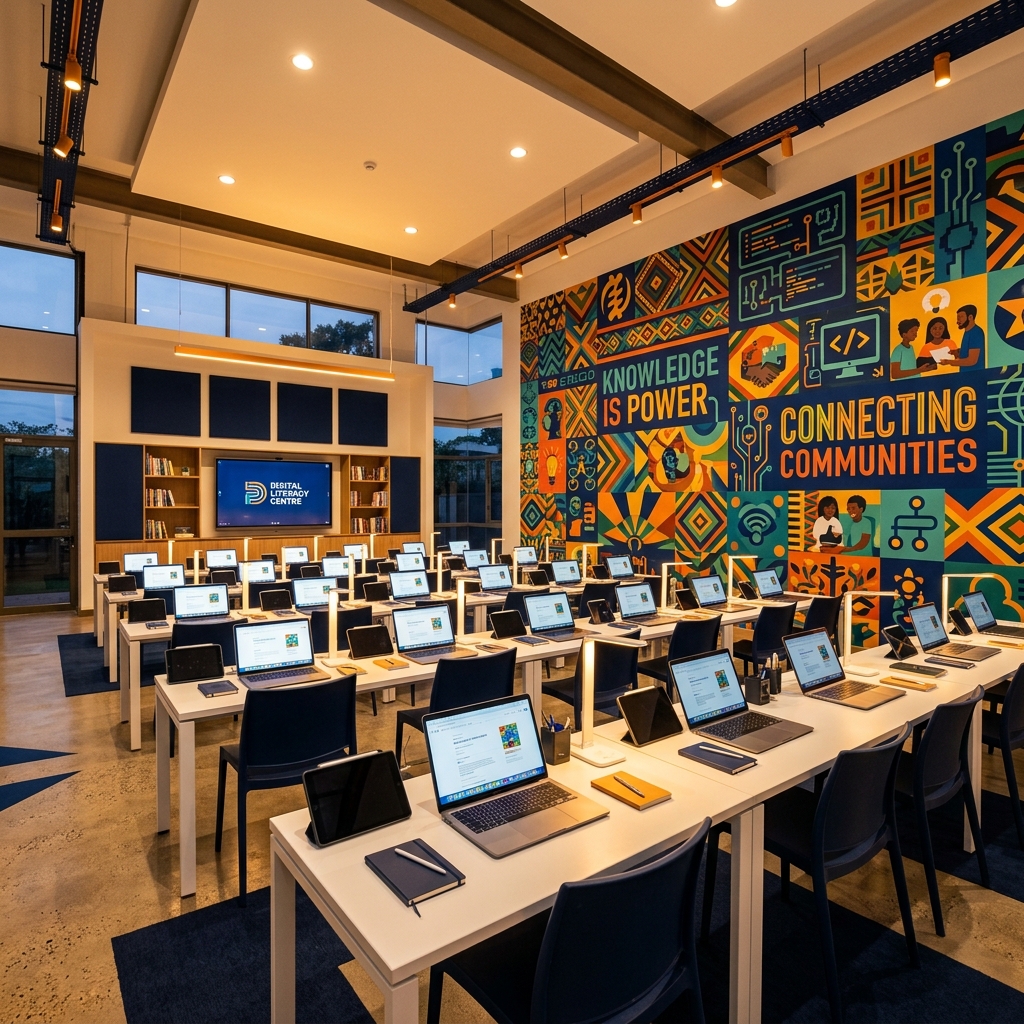
The Socinga Africa Foundation is equipping young Africans with the digital skills they need to participate in the global economy.
Africa is the world's youngest continent. Over 60 per cent of the population is under 25 years of age. This demographic reality presents both an extraordinary opportunity and a profound challenge. If young Africans are equipped with relevant skills, they will drive economic growth, innovation, and social progress. If they are not, the continent risks a generation of unemployment, disillusionment, and lost potential.
The Socinga Africa Foundation's Youth Empowerment programme — at socinga.africa/foundation/youth-empowerment — addresses this challenge through digital literacy training. The programme provides young people with the computing skills, internet competencies, and digital thinking that the modern economy demands.
Digital literacy extends far beyond the ability to use a computer. The Foundation's curriculum covers essential digital skills including word processing and spreadsheet management, internet research and information verification, email and professional communication, social media for business promotion, basic coding and website creation, and data analysis and visualisation.
Training is delivered through the Foundation's digital hub network. These facilities — detailed at socinga.africa/foundation/digital-hubs — provide the computing equipment, internet connectivity, and physical space that training requires. Experienced facilitators guide learners through structured modules, adapting content to suit varying levels of prior knowledge.
The programme targets young people aged 16 to 30, with particular emphasis on reaching those who are not in employment, education, or training (the 'NEET' cohort). By equipping these individuals with marketable digital skills, the programme creates pathways to employment, self-employment, and further education.
Impact evaluation forms an integral part of the programme design. Graduates are tracked for six months following completion, with data collected on employment outcomes, income changes, and further education uptake. This evidence base informs programme refinement and demonstrates impact to funders and sponsors.
The Foundation is actively seeking partnerships with technology companies, educational institutions, and corporate sponsors to scale the programme. Each partnership enables the Foundation to reach more young people in more communities, amplifying the programme's impact across the continent.
Support youth empowerment at socinga.africa/foundation/youth-empowerment.
This represents exactly the kind of structural change our industry has been waiting for.
Great analysis. I look forward to seeing how this scales across the COMESA region.